I’ve been pondering some striking passages in the book of Daniel that have clear application to current controversies about religious liberty.
Daniel and other well-bred young men were exiled from Israel, brought to Babylon, and trained as advisors to King Nebuchadnezzar and his successor, King Darius.
Daniel made other bureaucrats in the royal court look bad because of his advanced knowledge, skill, and impeccable character. They couldn’t find any malfeasance with which to accuse Daniel, so in their fierce jealousy they looked for a way to bring accusation “in connection with the requirements of his religion” (Dan. 6:4-5).
Their plot was to convince the king to enact a foolish decree forbidding the worship of anyone other than the king. If anyone worshiped any other “god” they would be thrown into the lion’s den. To ensure that the king would not change his mind or relent, they applied to it the unbreakable seal of the law of the Medes and Persians.
When Daniel learned about this decree, “he went home and knelt down as usual in his upstairs room, with its windows open toward Jerusalem. He prayed three times a day, just as he had always done, giving thanks to his God” (v. 6:10, emphasis added).
Daniel displayed serene confidence in the Most High God as he navigated this foreign and corrupt pagan culture. People could threaten him all day, and it wouldn’t sway him from worshiping the true God.
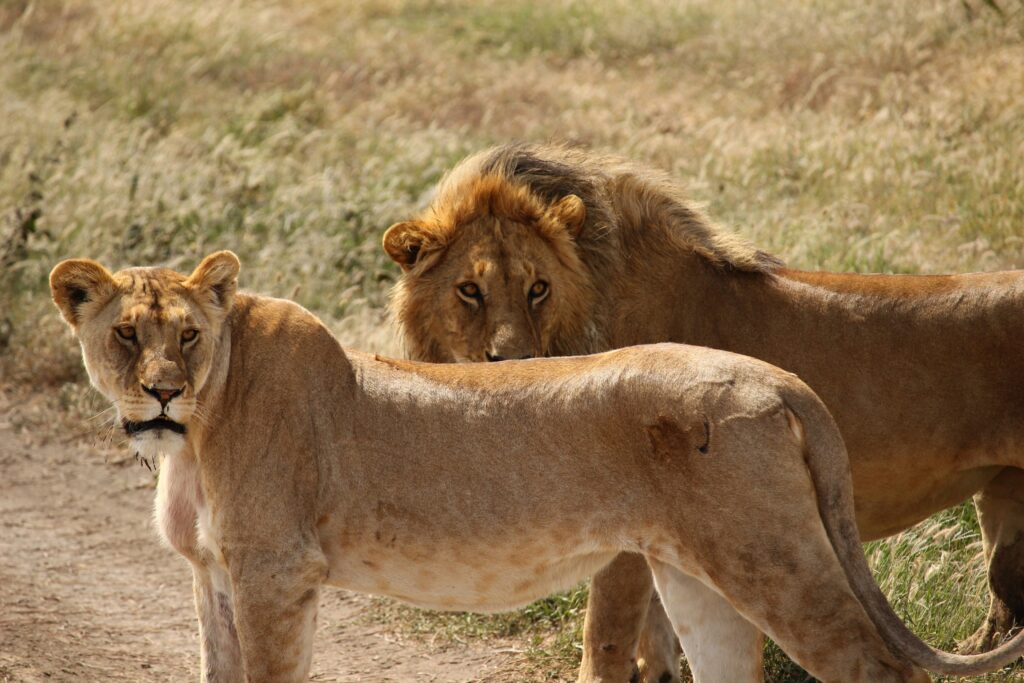
The envious officials “tattled” on Daniel to the king. Darius was greatly grieved that he had signed the edict, and tried to come up with an way to save David from the lions, to no avail. He was arrested and thrown into a pit with hungry lions.
The king was deeply troubled, because he loved and valued Daniel. He fasted, prayed, sought no entertainment, and got no sleep that night.
When the sun rose, the king raced to the den of lions to see about Daniel’s fate:
When he got there, he called out in anguish, “Daniel, servant of the living God! Was your God, whom you serve so faithfully, able to rescue you from the lions?” Daniel answered, “Long live the king! My God sent his angel to shut the lions’ mouths so that they would not hurt me, for I have been found innocent in his sight. And I have not wronged you, Your Majesty.” The king was overjoyed and ordered that Daniel be lifted from the den. Not a scratch was found on him, for he had trusted in his God. (Dan. 6:20-23).
We see the LORD mightily at work in this scenario! Not only did he rescue the innocent Daniel, he made it perfectly clear to the king that it was Daniel’s God, “whom you serve so faithfully,” that had done the rescuing.
Further, the king became a believer. Darius was so convinced of the reality of Almighty God that he made a declaration to be published throughout the land:
For he is the living God, and he will endure forever.
His kingdom will never be destroyed, and his rule will never end.
He rescues and saves his people; he performs miraculous signs and wonders in the heavens and on earth.
He has rescued Daniel from the power of the lions.” (26-27)
In a culture becoming increasingly hostile to the Christian faith, I ask myself:
If the government were to dictate that I deny my faith in God, charge me to abandon my worship or prayer to the God of the Bible, or bully me into worshiping any false god, would I go to my death rather than betray the Lord? Would I be brave? Would I keep him first in my heart and mind like Daniel, and worship him as usual?
This is not a popular notion, but Jesus said that anyone who can’t say yes to these questions is not fit to be his disciple. A saved Christian perhaps, but not a true disciple. (Matthew 16:24-25; Mark 8:34; Luke 9:23, 14:27).
It is not premature for us to consider these things. There are plenty of tyrants waiting for Satan to allow them a foothold to accuse Christ-followers and persecute them to their deaths, if possible. How will we respond? I hope, if this happens, that we respond like Daniel, and like Jesus himself.