I recently talked with a friend about how our ways of serving God and his people have changed over time.
We acknowledged that we both have progressed to a different stage of life, where we are not as occupied with serving in our churches as we used to be. Moving and resettling in other parts of the country and dealing with the consequences of Covid shutdowns have contributed to this change.
There are seasons and reasons for shifts in mission and engagement, both voluntary and involuntary. God remains sovereign. We must discern how he refines or redefines our ministries and vocations.
An example came to mind from my own life.
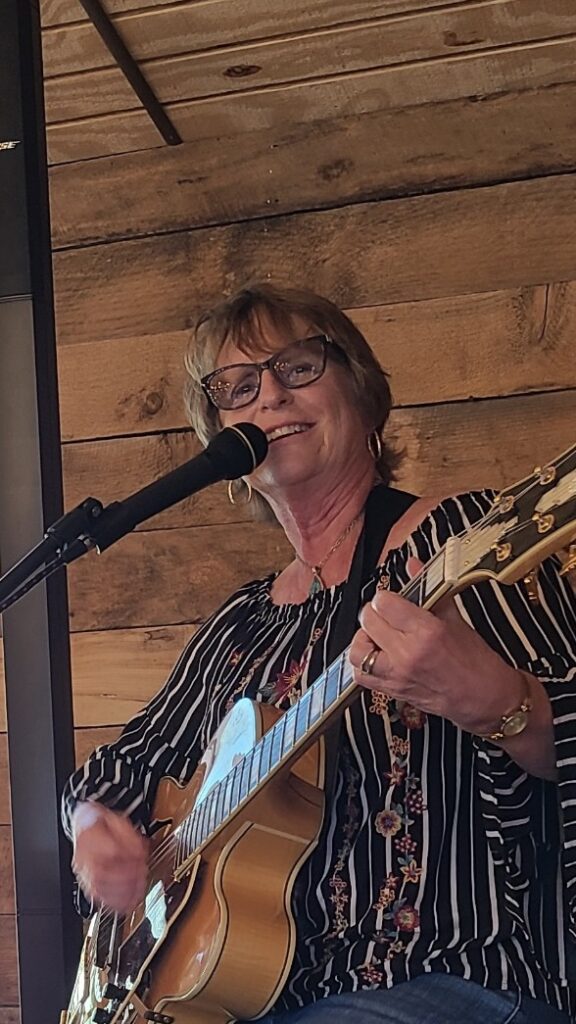
I’ve been doing many gigs as a jazz guitar player and singer recently. (Yes, it’s fun.) Although most of the songs I sing professionally would be classified as secular, because I am a spirit-filled Christian, perhaps they are not secular when they come from my heart, mouth, and fingers. Depending on the vessel, can the secular be made sacred?
Let’s look at the meanings of these big concepts.
Secular has various definitions and synonyms:
Denoting attitudes, activities, or other things with no religious or spiritual basis…characteristic of or devoted to the temporal world as opposed to the spiritual world…earthly (not heavenly)…profane, mundane, terrestrial. (Source: The Oxford Dictionary online)
Sacred also has a spectrum of meanings:
Dedicated or set apart for the service or worship of a deity…entitled to reverence and respect…of or relating to religion : not secular or profane, e.g., sacred music…highly valued and important (Source: Merriam Webster Dictionary online).
Interesting. Sacred objects, activities, and persons are set apart. In the spiritual realm, they are used in service to God with a reverence and humility that befits those saved and called by him. Remember, he has consecrated us as priests:
You also, as lively stones, are built up a spiritual house, a holy priesthood, to offer up spiritual sacrifices, acceptable to God by Jesus Christ…But you are a chosen generation, a royal priesthood, a holy nation, a peculiar people; that you should shew forth the praises of him who has called you out of darkness into his marvelous light (I Peter 2:5, 9).
Colossians 3:22-24 provides a beautiful summation of this New Testament ideal:
Servants, obey in everything those who are your earthly masters, not by way of eye-service, as people-pleasers, but with sincerity of heart, fearing the Lord. Whatever you do, work heartily, as for the Lord and not for men, knowing that from the Lord you will receive the inheritance as your reward. You are serving the Lord Christ.
So…if engineers become Christians, does their work become Christian engineering? If doctors and nurses are born again, do they now practice Christian medicine?
I think not. They simply begin to live in reverent fear of a holy God who has privileged them to serve him in whatever work they do. They apply their energy and talent now not just to receive earthly blessings, but to bring glory to Christ.
Their expertise and skill remain the same. Their conversion may well transform the way they serve in their roles, or how they treat the people around them, or the ethics that guide their practices. I would hope so, because this reveals the process of sanctification. But they don’t have to deconstruct their professional identity and rebuild a new one with the adjective Christian in front of it.*
Going back to my personal example, the venues where I play are part of my mission and territory as an ambassador for Christ. This is true whether I talk and sing about Christ all the time or not.
I don’t proselytize onstage because it wouldn’t be appropriate. I’m not there to preach or evangelize. I’m there to entertain people and help the management create an inviting and pleasant atmosphere.
I used to wonder if I was somehow being unfaithful to Christ, but I began to understand that I can bring the sacred into all my creative pursuits regardless of their specific content or context. It’s about who I am and whose I am, and not simply what I produce.
Amy Grant created a bit of a scandal when she released her crossover pop hits in the 1990s. How dare the queen and pioneer of contemporary Christian music sully her brand and reputation with worldly pop songs?
She pushed against the accusations hurled at her, and I remember supporting her in doing so. She was singing her stories.
Life is made up of stories. Stories of pain and loss, love and heartbreak, sin and redemption, lost and found treasures.
The Bible is also filled with such stories, and some of them are quite scandalous. God’s word tells the truth about the messiness of being human, and it is rarely cloaked in flowery religious language. We’re allowed to do so also, as long as we stay clear of blasphemy.
I became a full-fledged born-again Christian in my early twenties. I’d been studying and making music since I was a little girl. My parents were not Christians, so none of the music we listened to was “Christian.” It was just music. Classical, jazz, blues, show tunes, rock, folk, ethnic. All of it. It was a musical smorgasbord I still draw from today in my choices as a performer.
In the few years just after my conversion, I wrestled with a self-imposed religious prohibition against some of the music I had played and sung that would clearly be labeled secular. Did I need to now devote myself to only music that had Christ-centered lyrics? Should I only play in churches?
I have come to peace with this issue. I am a skilled musician. My music changes atmospheres in both the church and the world. My presence affects those who listen and watch.
We should use every opportunity God opens to us to speak boldly about Jesus. Occasionally on stage, and often when I walk off the stage, I get to testify to someone openly that it is only because of God’s extravagant goodness and grace that I am even able to stand before them and offer anything of value.
I say this without boasting, because the same is true for every believer. We boast in him. We present our gifts before him, whether it is on a job site, in a hospital, in our study, in our creativity, in church, and even in a wine bar.
Believers walking by the Spirit make the secular sacred in the sight of God and man.
*’ll never forget reading Rob Bell’s statement (before he veered deeply into the realm of progressive Christianity), “Christian makes a better noun than adjective.” (Velvet Elvis: Repainting the Christian Faith, 2012.