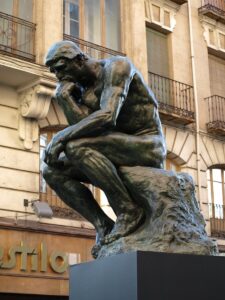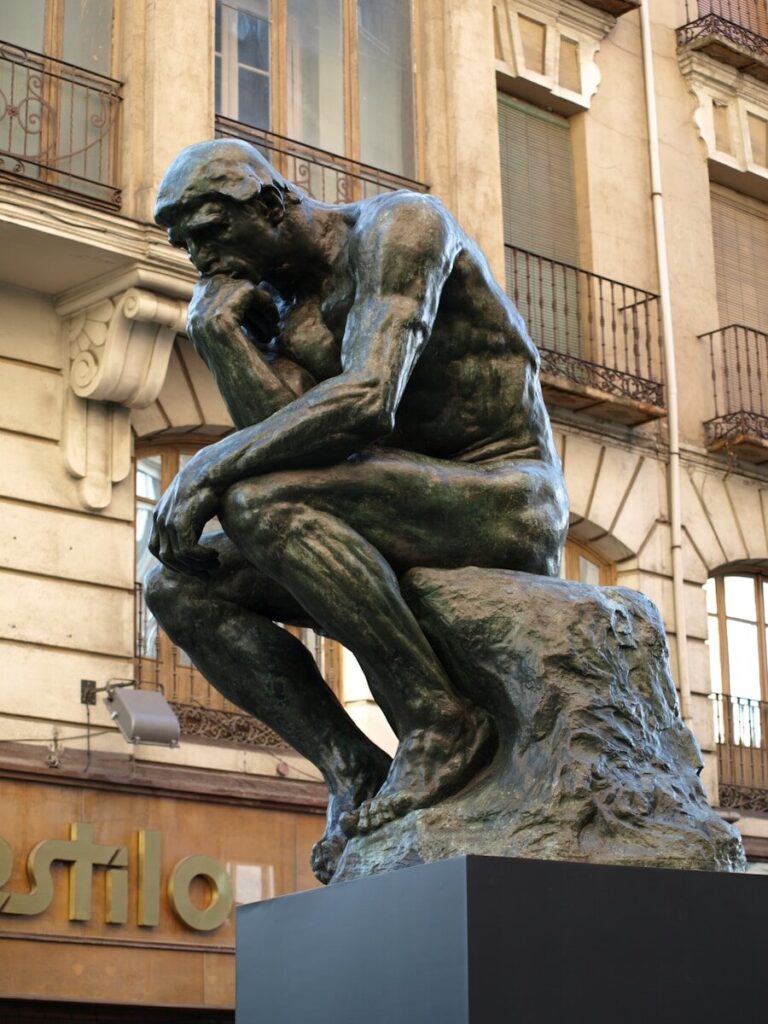
Ecclesiastes is a fascinating literary masterpiece. It encompasses wisdom like the Proverbs, poetry like Psalms, prophecy like Jeremiah, and dark perspective like Job in his worst moments of grief.
The first chapter and verse identifies the author as Solomon, the Teacher, King David’s son, who ruled in Jerusalem. This fact of authorship helps with interpretation of the book, because we know a good bit about Solomon’s life from the historical books of Samuel, Kings, and Chronicles.
Solomon started well, full of wisdom and a burning desire to lead his kingdom in a godly manner. His was the most prosperous and peaceful reign over Israel in the chronicles of the Davidic dynasty.
Later in his life, however, Solomon consorted with and was undoubtedly influenced by hundreds of idolatrous wives and concubines. He lost his way as a submitted believer and worshiper of the one true God. His writings in Ecclesiastes indicate that he became tormented with negativity, futility, and hopelessness.
Though highly pessimistic in this text, the Teacher is not atheistic. As the son of David, as the builder of God’s temple, having seen the shekinah glory of God fall upon the priests so they couldn’t even minister…how could deny the existence of God?
In fact, the Teacher returns repeatedly to refrains about enjoying, honoring, and fearing God, summed up in the last two sentences of the book:
Fear God and obey his commands, for this is the duty of every person. God will judge us for everything we do, including every secret thing, whether good or bad. (12:13-14).
Beyond these basic principle of obedience and judgment, he claims that all is meaningless, a constant turning, churning, repetitive cycle of trying to find a lasting value in living, when it is all just a chasing after the wind. Listen to these beautifully poetic but tragic words:
What do people get for all their hard work? Generations come and go, but nothing really changes. The sun rises and sets and hurries around to rise again. The wind blows south and north, here and there, twisting back and forth, getting nowhere. The rivers run into the sea, but the sea is never full…Everything is so weary and tiresome! (1:3-8)
I could quote more of this first chapter, but you get the point. Vanity of vanities, he laments, it’s all meaningless, so what’s the point of trying?
There are not many good places this attitude can take a person psychologically or spiritually. Extremes of nihilism and suicide on one end and rampant hedonism on the other.
Though Solomon doesn’t explicitly endorse suicide, he comes close, claiming that the dead are better off than the living…and more fortunate of all are those who were never born (4:2-3).
Great. Thanks for the encouragement, Sol.
Solomon does endorse a certain amount of hedonism as a way of coping with the meaninglessness of our wretched mortal existence.
So go ahead. Eat your food and drink your wine with a happy heart, for God approves of this! Wear fine clothes, with a dash of cologne…for when you go to the grave, there will be no work or planning or knowledge or wisdom. (9:7-8, 10)
He seems to be saying that we might as well party hard, because it’s the only thing that will make life bearable, and God is OK with that. Your days are numbered and you won’t get another chance at life.
What about the Jewish covenant with God?
This has me circling back to thinking of the Jewish characters in my haunting and true Holocaust novel.
These were liberal, cultural Jews who were not highly religious. My father was very much like them—educated, morally upright, concerned with social justice more than religious practice, driven by inner convictions to make the world better. This is the embodiment of the Jewish concept of tikkun olam, healing the world.*
Solomon, who, with all of his inner conflicts about the meaning of life, was an industrious builder, cultural patron, social engineer, and intellectual giant. He didn’t sit around waiting for death, nor did he support immoral value system or foolish behaviors. With all his faults, he worked to make the world more beautiful and just.
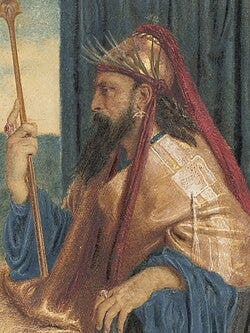
He opined that it is better to have a wife than to be alone. It is better to be a poor, wise, and humble person than to be a powerful, foolish, and boastful king. It is good to work hard at whatever work God has entrusted to you than to be lazy and careless.
If Solomon believed all is vanity, why would any of these things matter? Even if his faith wavered, surely he still believed that humans are responsible for doing good and not evil. He believed in keeping God’s commandments, but stopped walking the walk. He was one very conflicted, contradictory dude.
After puzzling over these things a while, I got a revelation.
What is missing in Solomon’s thesis, which may be the cause of the blatant inconsistencies of his arguments in Ecclesiastes, is a belief in resurrection and an afterlife!
The Teacher states that once we are done, we are done, with no further consciousness or future life. He had no John 3:16 to comfort him. He lacked the revelation that turned Saul the self-righteous Pharisee into Paul the hope-filled evangelist.
Humans are not designed to live without hope.
I find it so interesting that the national anthem of Israel is Hatikvah, The Hope. The song expresses the ancient hope in their return to their promised homeland, fulfilled in 1948.
Hope has long been embedded in Jewish identity, and it has given them the ability to recover their communities over and over again. Solomon, who lived gloriously at the center of that universe, Jerusalem, must have become so hardened that he could not embrace God’s promise of an eternal kingdom.
We all know that without hope in something higher, greater, cleaner, freer, and truer, life on this planet can become unspeakably sad, tedious, monotonous, and pointless.
For Jesus-followers like me, hope doesn’t rest in our work, our things, our families, our successes, or our money that keeps us moving forward and working hard.
Most of us believe, with our Jewish friends and neighbors, in a personal responsibility to contribute and make the world better for others. The difference is that Christians believe this is not enough. We must put our the faith and trust in Yeshua, whom we have come to believe is The One. Only he can truly heal the world. We merely get to participate in his plans.
He is our Savior and Redeemer and this makes all we do in his name meaningful, not meaningless.
There is reward to come. There is a welcome to come. There is a “Well done!” to come.
I will close with a couple of apostolic counters to Solomon’s dreary outlook:
So, my dear brothers and sisters, be strong and immovable. Always work enthusiastically for the Lord, for you know that nothing you do for the Lord is ever useless. (1 Cor. 15:58)
For we are God’s masterpiece. He has created us anew in Christ Jesus, so we can do the good things he planned for us long ago. (Eph. 2:10).
That doesn’t sound like our lives are a meaningless chasing after nothing!
*In the book I am now reading, Jews and the Left, Batya Ungar-Sargon documents the phenomenon that has led to the tendency of Western Jews to be proportionately more liberal or progressive than their non-Jewish counterparts. They still vote for Democrats in large numbers, even as the Democrat party has become more and more openly anti-Semitic. Ungar-Sargon documents how many Jews remain cemented to the outdated and now fallacious notion that Democrats are the party of justice and compassion who represent and care about the needs of the poor and oppressed, including Jews. In reality, Jews are now unsafe in the company of many on the left, rendering their political stance suicidal.